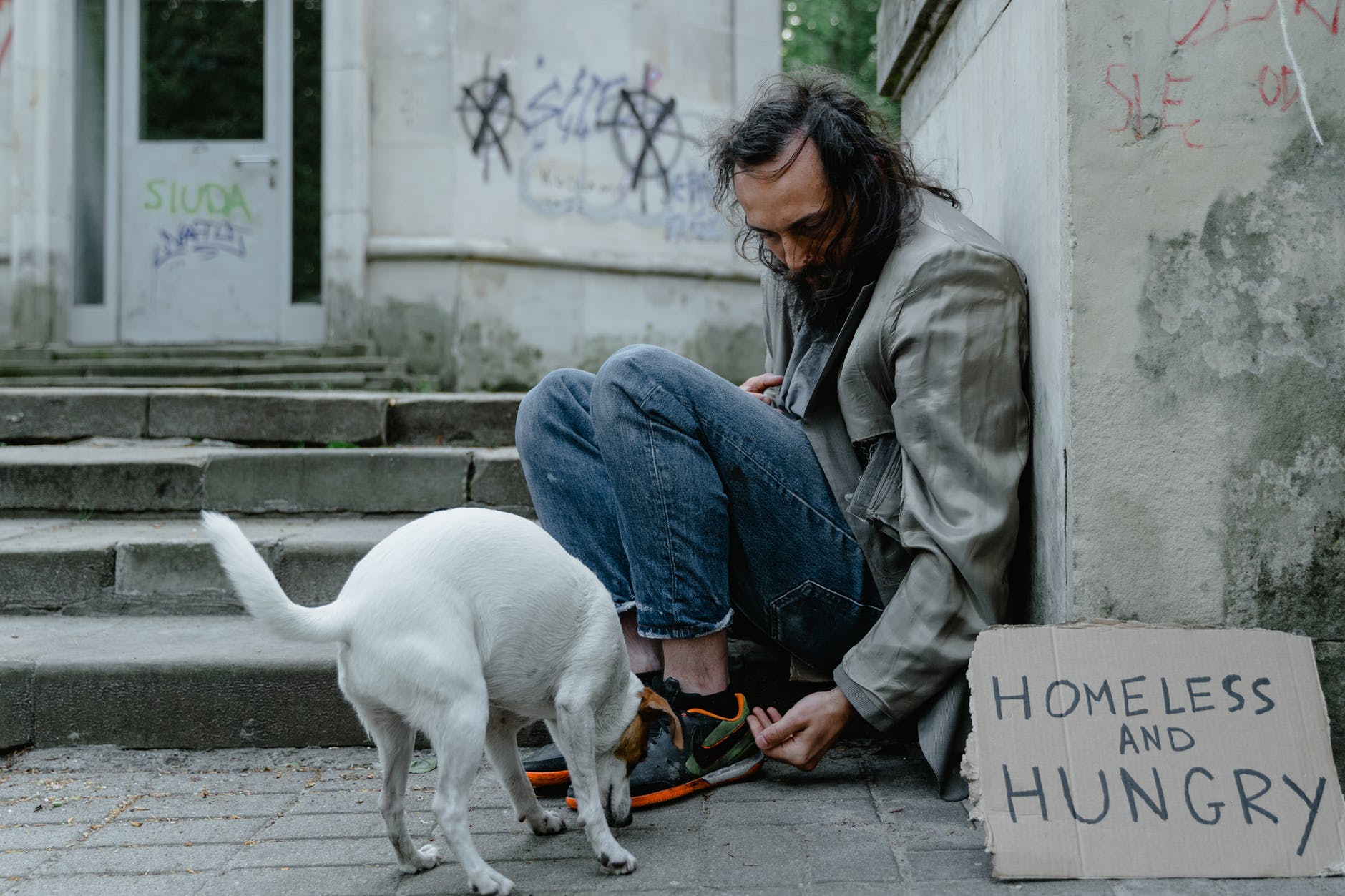
Discover the Beautiful Community Our Nation’s “Hidden People” Create: Stop by Your Local Homeless Shelter with a Donation—or Volunteer!
Today I made my third visit to Easton’s homeless shelter, Safe Harbor, to drop off the concession stand coffee that remained after the morning’s track and field meet. While packing up bottles of Gatorade and bags of Doritos, I couldn’t bring myself to dump the nearly full box of lukewarm coffee. Our head coach had made a stop at Dunkin Donuts en route to the meet and proudly offered two Boxes O’ Joe to the booster club ladies working concessions. Coach seemed confident that the brown, branded boxed coffee would generate serious revenue for Track and Field Booster Club. A few cups were sold during the meet. I drank about three (I confess, I didn’t pay). But quite a bit remained as our runners, jumpers, and throwers exited the field, exhausted, carrying equipment, gym bags flung over shoulders.
Coach approached the concession hut after nearly all athletes had exited the field and asked, “How d’we do?” Um. Think, Julie. “Great, Coach!” (I lied.) “Yeah, I thought that’d go over well,” he responded proudly.
Now I really couldn’t dump the coffee.
A quick flashback provided direction: I recalled my second visit to Safe Harbor. It was after the previous summer’s track and field end-of-season picnic. We had tons of leftover hot dogs, rolls, and condiments. Again, thanks to the coach’s generosity—he had decided last minute to bring steak and Angus beef hamburgers to grill for the team. Having learned during my first visit to the homeless shelter (church ladies had recruited me, along with about three other good Presbyterians, to prepare and serve a meal) that food donations are very much welcomed at Safe Harbor, I detoured my route home and brought the leftover items to the shelter.
So, instead of being discretely poured down the concession hut sink, the contents of the brown-branded Box O’Joe took a short trip to Safe Harbor, accompanied by a magenta- and orange-striped white bag that contained creamers, sweeteners, and cups.
I drove up to the shelter courtyard, grabbed “Box O’Joe” and the white bag flashing the God-awful combination of colors, then proceeded to the donation drop-off table. A young man was standing nearby, so I greeted him: “How’s it going?” He responded with a smile and approached me while four men sitting at a picnic table about 20 feet away considered me and my offering.
“We have some leftover coffee from an event,” I explained. “It’s not super hot, but it’s good.” I poured a swallow and drank it to demonstrate. “Would you like it?” The young man turned to a grey-bearded man—one of the four seated at the picnic table—and hollered: “Cap!”
“Cap” paused, then rose from the picnic table and grabbed a cane. He approached the drop-off table while studying me. “Whatcha got there?” He commanded. “Coffee,” I explained. “Dunkin Donuts coffee. We got it this morning but didn’t finish it.” The man lifted his cane and poked at the bag of cups, creamers, and sweeteners in an apparent attempt to reveal its contents. After sufficiently examining the supplies, Cap decided. “Yep. We’ll take it. I’ll get m’ boys to come fetch it.” He turned to the three who remained seated at the picnic table and called out, “Lefty! Side Car! Jim Bob!” The three jumped to attention and walked toward us. “This here lady brought coffee,” Cap clarified, in case it wasn’t entirely clear that the branded packaging contained what it was supposed to. The three expressed their appreciation: “Thank you!” “God Bless you!” They gathered Box O’Joe and the poked-at bag, then quickly returned to the picnic table.
Cap looked me in the eyes, offered a sharp nod, then turned and walked back to the picnic table, once or twice lifting his cane to “his” boys while shouting further directives.
I considered the grey-bearded man as he walked away from me, imagining his story. I wanted to learn more about him, but something told me that I might not retrieve it from him too easily—others might, perhaps—residents of the shelter, in time, but not me.
Awareness of “otherness” goes both ways, and this truth may come as a surprise to folks who live on the more privileged side of “other.” Cap lives in a world that is much different than mine, and this reality, I’m sure, is felt clearly by him as well as by me.
My identity is very much rooted in my relationship with others—within the intimate community that I took great care in creating, and which I protect fiercely. Over the past 15 years, my community—my circle—has polished beautifully. Some members were knocked out, others pulled in, and certain rare gems pulled very closely in. Existing as a component within my community is as natural as breathing itself.
The need for community doesn’t escape residents of a homeless shelter. Having a sense of community unites us and makes us feel that we are part of something greater than ourselves. Within the embrace of community, we can feel secure, cared for—even loved. And who wouldn’t cherish this more than a person without a home, and perhaps without family?
Americans are big on the idea of volunteering. Most large corporations have employee-based volunteer programs designed to “do good” for the community, and corporations are sure to showcase this “do-gooding” as part of their public relations initiatives. Volunteering, along with donating, in its pure form is helping—helping in a way that connects the helper to the person being helped. No motive. Nothing to gain. Just sharing. By sharing, with pureness of heart, the boundaries that separate communities soften.
Share with your local homeless shelter. Volunteer. Donate. Connect with the shelter community. I promise: You’ll leave with more than you left.
Julie Mohr Emin
 Julie Mohr Emin
You must be logged in to post a comment.